

In the cradle of the sea, the tarantula dances
Second experiment 7'08"
on the sixth day, the first sound frequencies draw a port that seems to have seen the western civilizations pass through its stones; the sensations begin to sprout, it is in Campania. He has in his right hand a Tammorra, a large tambourine with dried goat leather, he sings excitedly. He is dancing a Tammurriatta, from the Tarantella family. A light-skinned, white-haired Danish man records him with a strange device while he dances
his body moves and convulses, the skin, the excitement, loses sensitivity. Deep, metallic sounds sprout, like shackles, he remembers a long time ago, his ancestors are descendants of sub-Saharan slaves (Bambara) who formed musical brotherhoods in Morocco, he grasps a fragment of reality, he is in Marakech, in a Gnawa brotherhood. He looks at his hands on the Sintir (Arabic: سنتير), also called Guembri (الكمبري), he feels the bass frequencies of the box in his guts, but the sound changes, it becomes sharper, the instrument shrinks in his hands while he hears his own voice _He recognizes it, it is a cure (djura), related to the baglama, it has always served him to accompany the songs of the Alevi tradition that he tries to keep alive, in honor of the wandering poets who came from the peoples of Anatolia. The words that form his lips are from Kaygusuz Abdal, a 14th century Alevi poet and dervish who traveled the eastern Mediterranean. Pressure on his chest, he falls into the past, he is in Alanya, as drawn by the cartographer Piri Reis
loses control, scientists change the parameters. He hears drums at the Moussem, a gathering of Saharan nomadic peoples at Moulay Idriss in 1967 in Fez, he faints in the crowd. He feels again, his heart is racing, he is running, he recognizes one of the scientists in the group of policemen after him, he realizes he is a bandit fleeing over a hill in Corsica as night falls around him. Reality comes into focus, a door, a house on the hillside, in Asco, a small commune. A face, Maria-Letícia Guerrini is called, asks her to hide him. Maria hides him in a crib in her house while she sings him a lullaby
scientists break down the specter, he feels himself sinking, as if sleeping, shrunken, absorbent cotton rubbing against his skin. He feels another voice catch in his throat, goes down, falls back down. A litany carries him away, he looks out his window at sunset in Thessaloniki, the city of his birth, they call him Schlomo Halevi Alkabetz, a Kabbalist poet in the sixteenth century. It is Friday, and he is intoning a fragment of "Lejá Dodí" (לכה דודי)._
In what he lives as a numerical dream, he meets a girl named Maria and a blind man who laugh and sing geometrically while he holds the Tammorra in his hands again. They are again on an island, Ibiza. The blind man seems to sing and talk to him at the same time. He tells him that the Tarantella was linked to the complex and ritual phenomenon of Apulian tarantism, a melancholic disease of the summer months, caused by the bite of the Lycosa tarantula. Emotional disorders, confusion of the state of consciousness, epilepsy, hysteria. It could only be cured with frantic dance sessions, with a musical exorcism. At the moment he realizes that the same man from the bar is in front of them with the machine watching him, he is brought back to the subway continue reading...
Here you can see in detail the collage and the songs used in the piece with their albums/files of provenance:












album - Maroc, Marrakech; Musique de confrérie
artist - Brotherhood of former black slaves Gnawa-Derbists, Bambara.
place - Marruecos, 1966
album - Pietre Preziose E Oro Fino - Old Music And Folksongs From South Italia
artist - A. & S. Striano & A. Striano. Maio
place - Campania, 1970
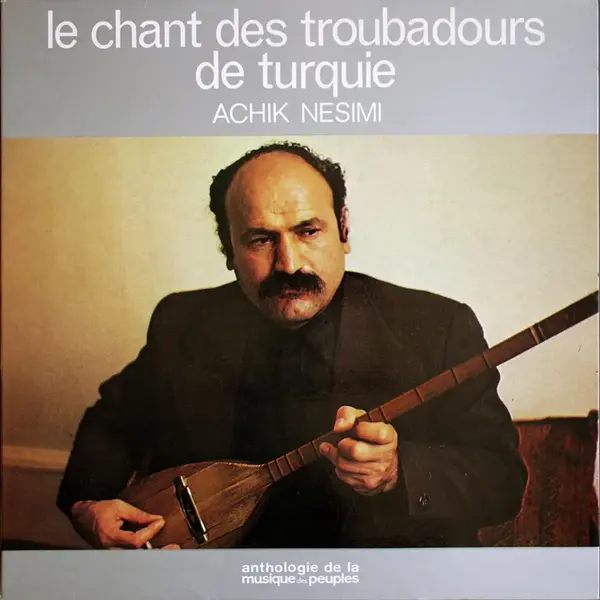
album - Le chant des 'troubadours' de Turquie
artist - Achik Nesimi
place - Turquía, 1979
Koca Tanri, 'The greatness of God', a 16th century poem by Kaygusuz Abdâl which is typical of the agnostic strand in Turkish poetry
album - Portrait of Andalusia - The Living Tradition
artist - VA
place - Andalucia, 1968
Recorded by Deben Battacharya
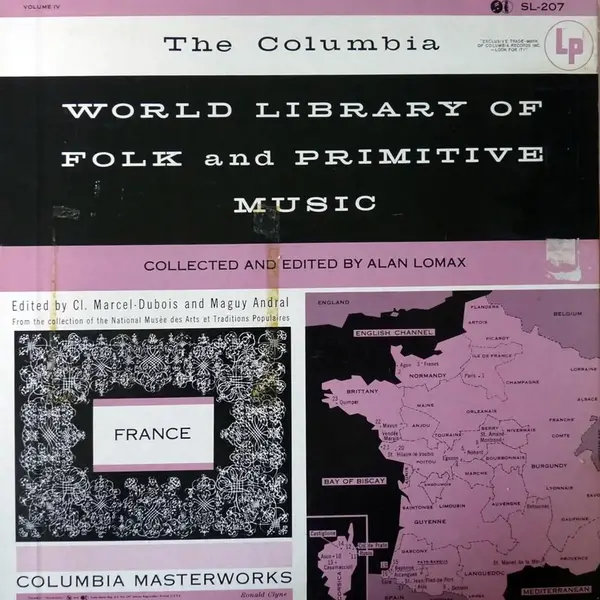
album - World Library of Folk and Primitive Music vol.4-France
artist - Marie-Letizia Guerrini
place - Córcega, 1954
In this lullaby, a Corsican bandit, pursued by the police, is hidden in the child's cradle by his wife. Lyrics - Sò stato all'ortu, sta mane di bon'ora / Tuttu par coglie piante, un mappolu di viola / Ava si chi l'anghiu trova / La to medicina sola / Fa lu nini, fa lu nana, Dormi, dormi o car di mamma / O trovu un nido, chi nientru ce dui'ove, / So statt's bede l'acella chile cole, / Er'un nidu di culumba / E tre volte l'aghiu trove
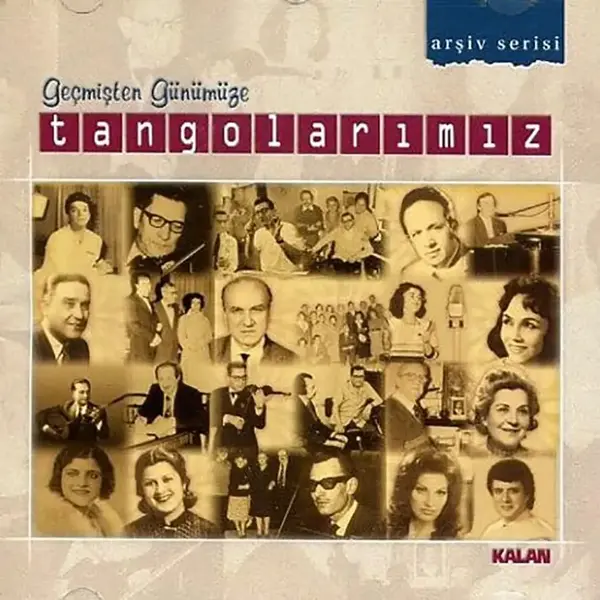
album - Our Tangos from Past to Present
artist - Zeki Müren
place - Turquía, 1999
album - Legendary Cantors
artist - Samuel Vigoda
place - Israel, 1920
album - Libye - Teda, Fezzanais. brandily, M.
artist - Teda people
place - Libia, 1969
album - Fes III 9/67 Alan Lomax
artist - Unknown
place - Marruecos, 1967
Audio notes - More recordings from the moussem of Moulay Idriss in Fes. This session comprises mostly religious folk songs and music of Sufi orders (ar. turuq, sing - tariqa). The tradition of celebration and veneration of holy men (ar. auliya') such as Moulay Idriss stems from Sufism, the mystical strand of Islamic belief, and several turuq incorporate music into their ritual practice, including the Hamadcha and 'Aissaouia orders.
album - Baleares / Alan lomax cultural equity
artist - Gabriel Isern
place - Baleares, 1952
album - Tenores. "Sounds of an Island" Vol. 1
artist - Tenor Milìa (Dorgali)
place - Cerdeña, 2003
album - Baleares / Alan lomax cultural equity
artist - Marí Marí, María (ca sa Corda)
location - Baleares, 1952
Recorded by Alan Lomax in Sant Josep, Ibiza/Eivissa, 7/1952 On the original box of tape T616, Lomax notes that the informant was about 15 years old ('Maria Marie Marí with drum accompaniment. She is a very pretty broad faced girl [...] of about 15').
album - Baleares / Alan lomax cultural equity
artist - Antoni Riera
place - Baleares, 1952
Recorded in Sant Josep, Ibiza/Eivissa, 7/1952 On the box of tape T614, Lomax notes that the informant was about 50 years old and partially blind, and emphasizes that he laughed a lot.
album - Dades Valley 9/67 / Alan lomax cultural equity
artist - Ahaidou Shepherds
location - Morocco, 1967
album - Valencia / Alan lomax cultural equity
artist - Banda de Música Castelló de la Ribera
place - Valencia, 1952
