

All songs lead to Ithaca
First experiment 9'22"
at the beginning, it simply separates from the present and its certainties. It begins again. It does not die. It does not go mad. It suffers. They continue. On the third day the sensations begin to appear, like confessions. He smells the sea, feels the breeze on his face. He can hear voices coming from the water. His body shudders at a wave of sound, he feels as if his consciousness is submerged she feels her chest swell, her ears, she is singing, it is her throat, but it is someone else, a woman from the Tosk region, from Albania, from the historical region of Illyria. She, as taker, takes one of the lines of the polyphony, her companion another, they tell of Konofat's journey. They sing about the waves The face of her companion melts with a new sound, a long lament, she feels a new voice in her throat distinguishable from the old one, her name is Kadriye, they are exiled in Istanbul, they are Kurdish from the region of Diyarbakır. Their land is distributed to others among promises after the first world war. Their voices intertwine in a polyphony that travels through time and the sea, unable to return. Other voices arrive from the other shore of the sea, Malaga: goodbye sweet child, goodbye sweet lover, goodbye..._
he recognizes a strong smell, a memory perhaps, but of another woman, it is alpechín. She feels the touch of the olives in her hands, sorts them and sings in chorus with other companions from Bormujos, near Seville
waves of time, sweat, salt. Her body folds with each new injection of the scientists, silence, a sonorous tremor. He remembers. His name is Ulysses Vamvakaris, a mangas, a rebeti. He had to flee Smyrna after the great fire, bringing his musical memories of east and west to Greece. He remembers standing on the shore with the fire on his back, while the city is invaded in the Greek-Turkish war during the partition of the Ottoman Empire. It is Kadriye, it is Ulysses with his bouzouki with thousands of Greek and Armenian refugees, looking at the horizon, at the boats that can take him to the other side of the sea
waves and frequencies like bubbles in the sea, voices, shouts, a spree in a bar. He has been hired by a señorito to play guitar all night long, in the Plaza de la Encarnación in Seville. Now he is a gypsy, Ulises el Rubio. In the bar there is a man watching him with a strange machine, an American. After the night of revelry he arrives at a market full of street vendors, he is one of them. He talks about the tomatoes he has left on the island. As the words come out of his mouth, he remembers an island, Sardinia
his voice mutates and the polyphony with it, other men stand beside him, singing of Christmas on the island as a Mizwad, a type of bagpipe made of goatskin, plays across the sea. Female voices dilute the previous sensation in an amalgam of darkness, the wind transports him from Tunisia to the Iberian Peninsula, he smells the countryside. His name is Ulysses Galleri, a peasant who is pursued by death, he sings again. The words in Catalan, take him further back in time, the end of the sixteenth century. He is a soldier returning to France from the wars of religion, but it is impossible to return, he is no longer the same, his name is Compère Guilleri, a highwayman
another jump in the sound spectrum, with a melancholy and alien resentments, he wakes up exhausted in the subway of scientists, in the present continue reading...
Here you can see in detail the collage and the songs used in the piece with their albums / source files:







album - Sound Library
artist - Ivo Vicic
place - Mediterráneo, 2017
album - Albania - vocal and instrumental polyphonies
artist - Choeur de femmes; chanteuses de Kolonjë
place - Albania, 1983
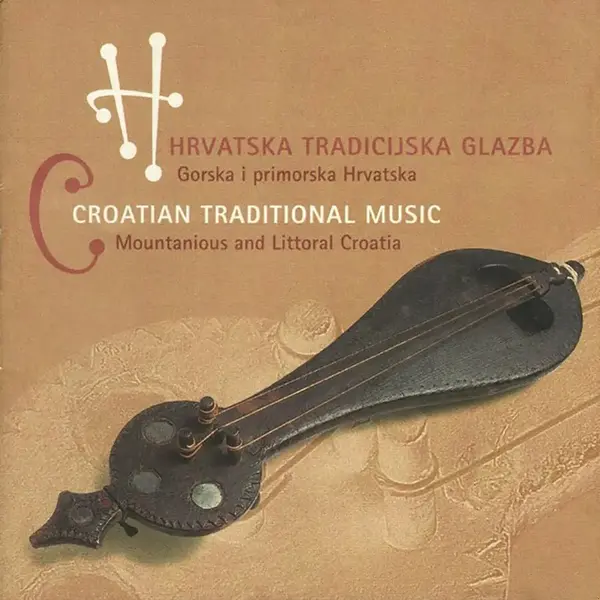
album - Croatian traditional music. Mountanious and littoral Croatia
artist - KUD 'Sv. Ivan'
place - Croacia, 2000
album - Lamentations de femmes kurdes déplacées - les chemins de l'identité kurde en Turquie aujourd'hui
artist - Kurdish people
place - Estanbul, 2003
Statement by Kadriye, exiled in Istanbul, from the Diyarbakır region. This lamentation is part of an epic in which the beloved hero, Cafero de Çolanî, tells how he is going to take her. The young woman says she wants to die for him, and suffer in his place.
album - Málaga / Alan lomax cultural equity
artist - Ana Toral Camague
place - Málaga, 1952
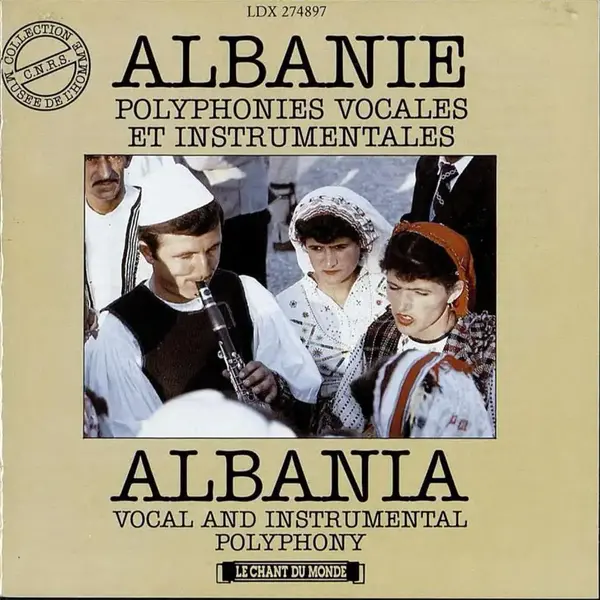
album - Albanie - polyphonies vocales et instrumentales
artist - Musiciens de Korçë
place - Tirana, 1983
Instrumental form with free rhythm, musicians from Korçë. Recorded in the premises of the Institute of Popular Culture of Tirana by Bernard Lortat-Jacob.
album - Sevilla / Alan lomax cultural equity
artist - Women sorting olives in Bormujos
place - Sevilla, 1952
Recordings made on a farm outside Bormujos of women sorting olives and singing. The rattle of olives on the sorting trays can be heard.
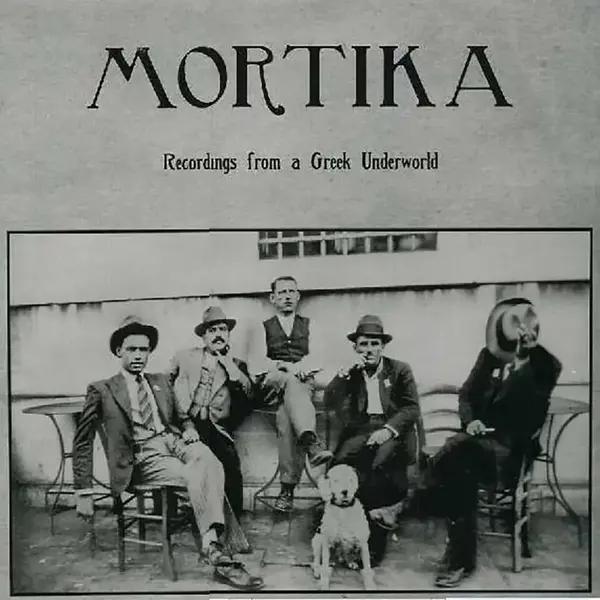
album - Mortika - Recordings from a Greek Underworld
artist - Márkos Vamvakáris, Stélios Perpiniádhis
place - Grecia, 2009
album - Al-Qahirah - Classical Music of Cairo
artist - Hesham El Araby
place - El Cairo, 1998
album - Sevilla / Alan lomax cultural equity
artist - E.G. León
place - Sevilla, 1952
Field log - 'an all night juerga [drinking bout and song fest] in Bar Luis down near the market in Seville. The singer and guitar player were paid for the evening by a wealthy man, Manuel León (Pepe la Triana) who invited me to come with my machine. The guitar player, El Rubio, Juan Antonio Martín, is the contact? the singer was a Gypsy named José Chamorro Pérez.' After the all-night session, around 8 -00 a.m., Lomax recorded several street vendors' cries.
album - Folkloric Music of Tunisia
artist - Abdessalem Zarga
place - Túnez, 1998
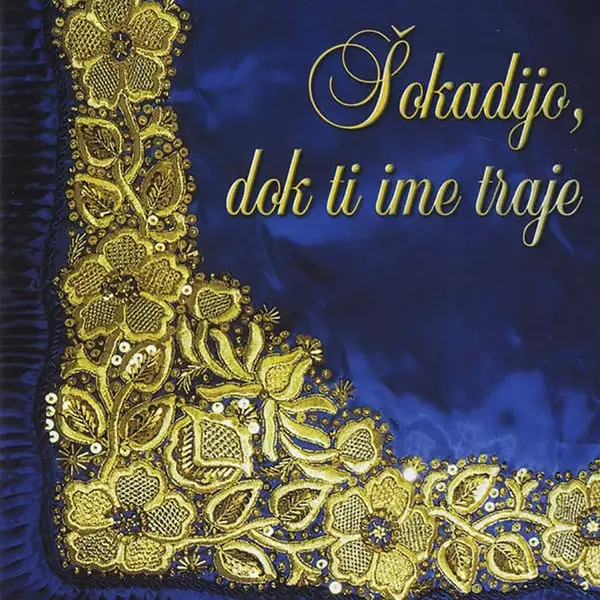
album - Šokadijo dok ti ime traje
artist - Kud Marinko Dekanić Rokovci
place - Croacia, 2002
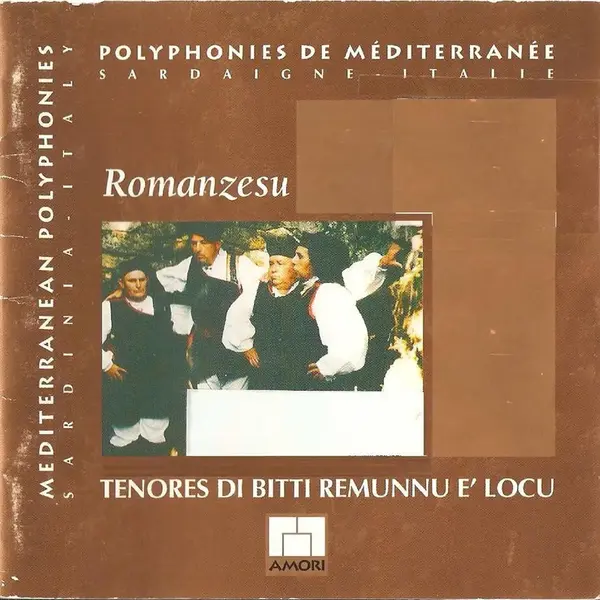
album - Romanzesu
artist - Tenores Di Bitti Remunnu E' Locu
place - Cerdeña, 1994
Anonymous popular Christmas carol describing the Nativity
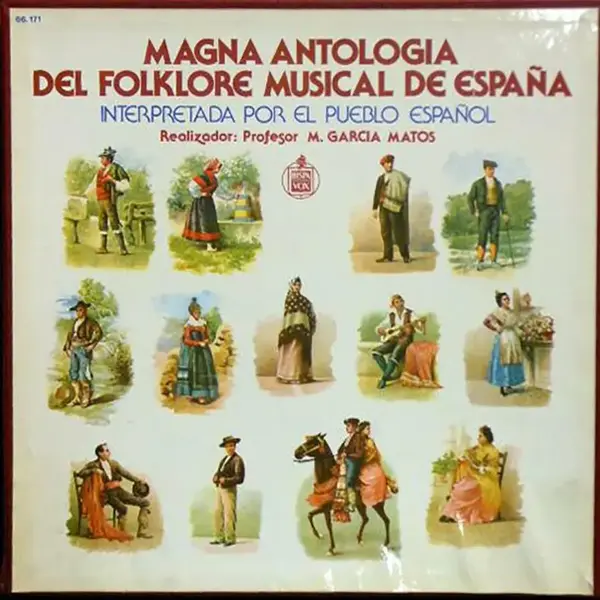
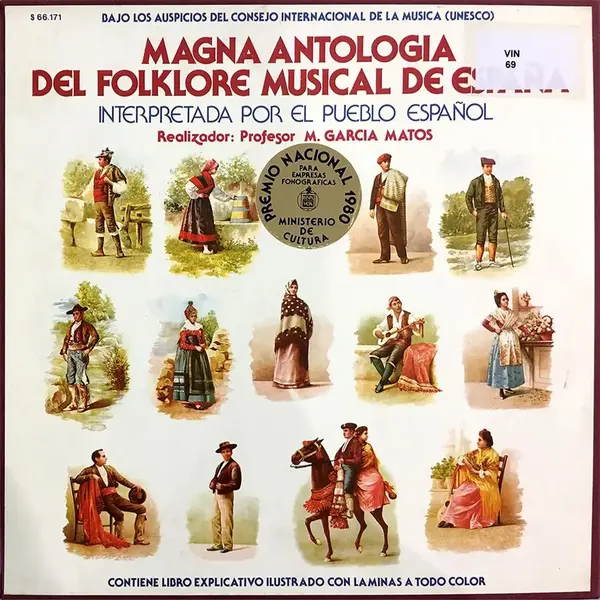
album - volume 08 - Balearic Islands - Basque Country. Magna Antología del Folklore Español
artist - VA
place - Mallorca, 1978
album - volume 05 - Catalonia - Aragon. Magna Antologia del Folklore Español
artist - VA
place - Lleida, 1978
album - vol 01 - Castilla La Vieja - Canarias. Magna Antología del Folklore Español
artist - VA
place - Segovia, 1960
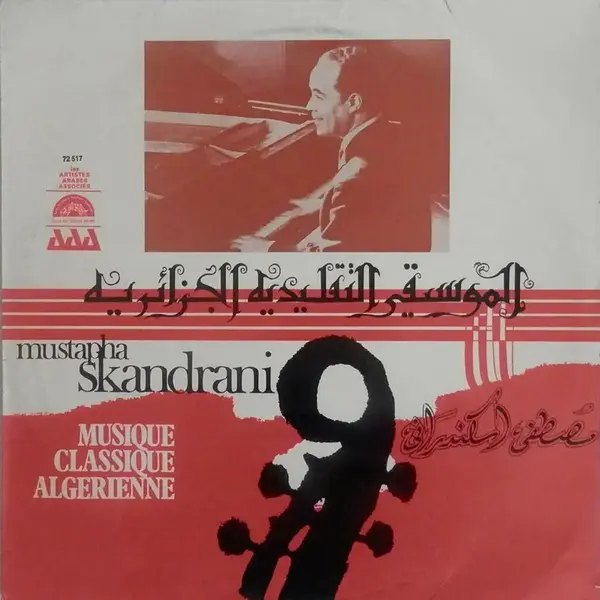
album - Musique Classique Algerienne
artist - Mustapha Skandrani
place - Argelia, 1965
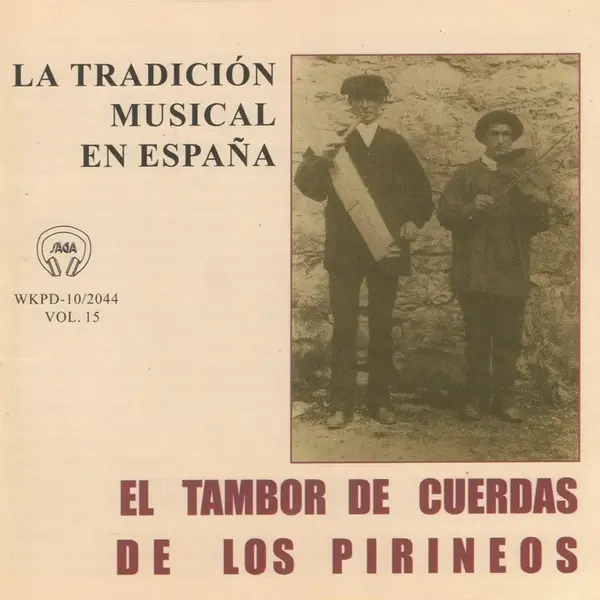
album - La Tradicion Musical En España 15 - El Tambor De Cuerdas De Los Prineos
artist - Biello Aragón
place - Aragón, 1999
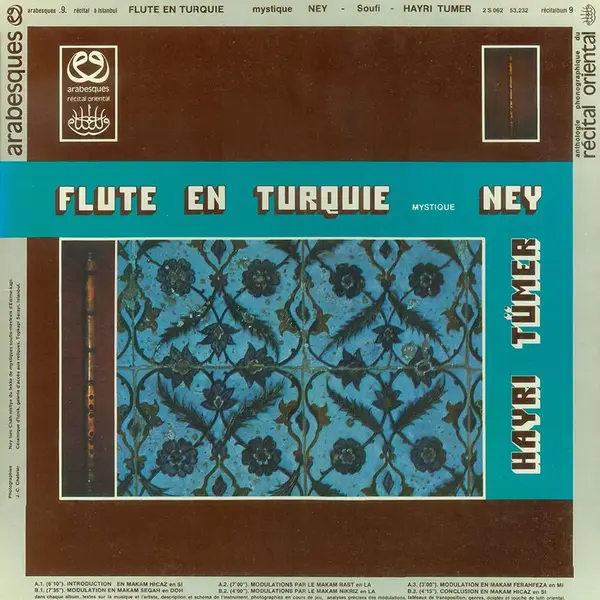
album - Flûte En Turquie - Mystique - Ney
artist - Hayri Tümer
place - Turquía, 1979
The ney is attached to the oldest instruments of humanity. Its name comes from the Persian word ney which means reed. Its development was particularly encouraged by the civilization of Islam, in which it became a populist, classical and sacred instrument. The ney has recently conquered its place in the secular classical instrumental ensemble.
